

Did you know that 77% of consumers make purchasing decisions based on a brand's name? A powerful brandable name is more than just a label; it's the cornerstone of your business identity, influencing perception, recall, and ultimately, success.
Key Takeaways
A memorable brand name is crucial for recognition, trust, and marketing.
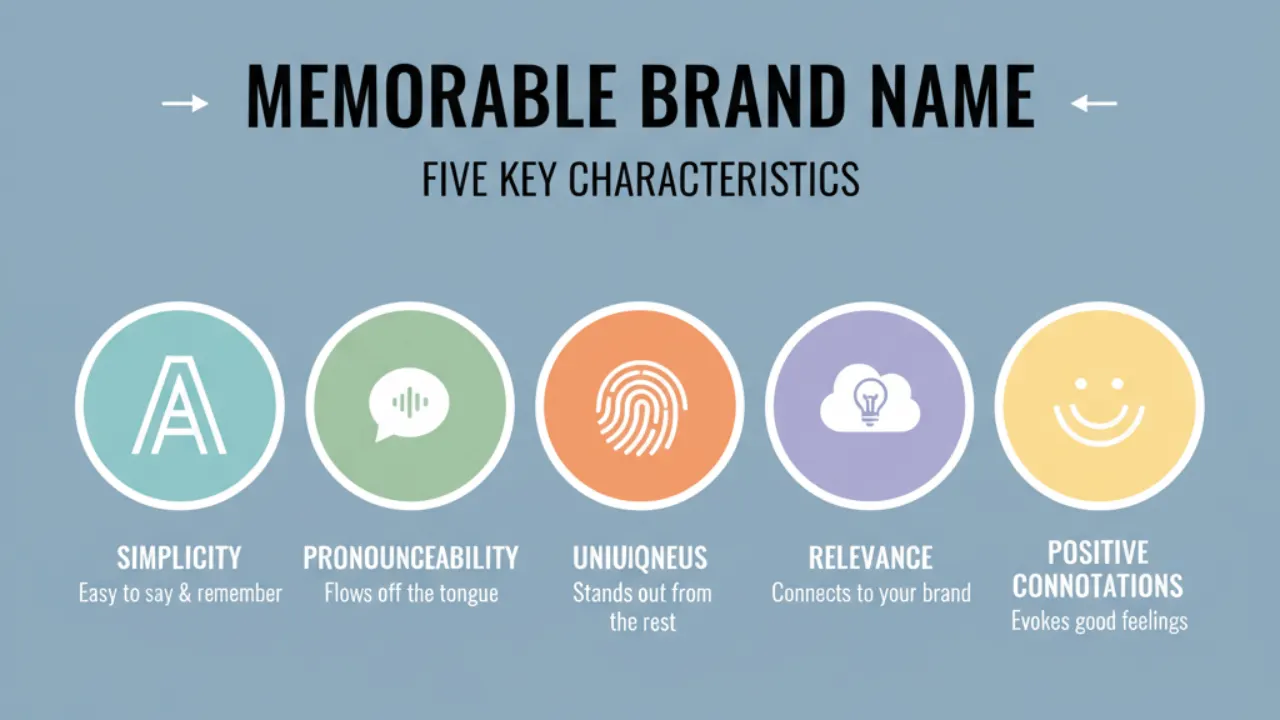
Key characteristics include simplicity, pronounceability, uniqueness, relevance, and positive connotations.
Thoroughly check domain, social media, and trademark availability.
Test name ideas with your target audience for feedback.
Avoid common pitfalls like generic or overly complicated names.
Leverage tools like name generators and thesauruses, but maintain strategic oversight.
Crafting a name that sticks in people's minds isn't a matter of luck; it's a strategic process. This guide will walk you through the essential steps and considerations for creating a brandable name that's not only memorable but also resonates with your target audience.
The Crucial Role of a Memorable Brand Name
In today's crowded marketplace, standing out is paramount. Your brand name is often the first point of contact a potential customer has with your business. A strong, memorable name can:
Enhance Brand Recognition: A catchy name is easier to recall, leading to greater brand awareness.
Build Trust and Credibility: A well-thought-out name suggests professionalism and attention to detail.
Facilitate Marketing Efforts: Memorable names are easier to share through word-of-mouth and social media.
Differentiate yourself from Competitors: A unique name helps you carve out your own space in the market.
Evoke Emotion and Connection: The right name can create an emotional bond with your audience.
Consider the success of brands like Apple, Google, or Nike. Their names are simple, distinct, and instantly recognizable, contributing significantly to their global appeal. The power of a brandable name cannot be overstated; it's an investment in your business's future.
Understanding the Fundamentals of Brandability
Before diving into the creative process, it's essential to grasp what makes a name truly brandable and memorable. Several key characteristics contribute to a name's effectiveness:
1. Simplicity and Conciseness
Shorter names are generally easier to remember and pronounce. Think about names like Zoom, Slack, or Uber. Their brevity makes them instantly accessible and digestible. A complex or lengthy name can be a barrier to recall.
2. Pronounceability and Spellability
If customers can't say it or spell it, they'll struggle to find or recommend it. Names that are intuitive to pronounce and spell reduce friction. Avoid unusual spellings or phonetic combinations that might confuse people.
3. Uniqueness and Distinctiveness
Your name needs to stand out from the competition. A unique name prevents confusion and helps establish your brand's individual identity. Generic names often blend into the background.
4. Relevance and Meaning
While abstract names can work, a name that subtly hints at your product, service, or values can be powerful. It provides context and can create a deeper connection. However, avoid being too literal, as this can limit future growth.
5. Positive Connotations
The name should evoke positive feelings and associations. Avoid names that could be misconstrued or have negative implications in different languages or cultures.
6. Availability (Domain Name & Social Media)
In the digital age, securing a corresponding domain name and social media handles is crucial. A name that's unavailable across key platforms is a significant disadvantage. You can check domain availability at Namecheap or similar registrars.
The Creative Process: Brainstorming Memorable Names
Now, let's get to the exciting part: generating name ideas. This phase requires creativity, strategic thinking, and a willingness to explore various avenues. Here's a structured approach to brainstorming:
1. Define Your Brand Identity
Before you brainstorm, you need a clear understanding of:
Your Target Audience: Who are you trying to reach? What are their values, interests, and language?
Your Brand Values: What principles guide your business? (e.g., innovation, reliability, sustainability)
Your Unique Selling Proposition (USP): What makes you different and better than competitors?
Your Brand Personality: Is your brand playful, serious, sophisticated, or approachable?
Answering these questions will provide a foundation for generating relevant and impactful names. For example, a sustainable fashion brand might lean towards names evoking nature or ethical practices.
2. Explore Different Naming Categories
There are several categories of names you can explore:
Descriptive Names: Clearly state what you do (e.g., General Electric, International Business Machines). Pros: Clear, informative. Cons: Can be limiting, less creative.
Evocative Names: Suggest a benefit or feeling (e.g., Nike - victory, Amazon - vastness). Pros: Emotionally resonant, creative. Cons: Meaning might not be immediately obvious.
Invented Names: Completely made-up words (e.g., Kodak, Xerox). Pros: Highly unique, ownable. Cons: Require significant marketing to build meaning.
Founder Names: Based on the founder's name (e.g., Ford, Disney). Pros: Personal, can build a legacy. Cons: Less flexible if the business evolves or is sold.
Acronyms and Initials: Often derived from descriptive names (e.g., IBM, KFC). Pros: Can be short and punchy. Cons: May lack meaning initially.
Metaphorical Names: Use metaphors to convey meaning (e.g., Jaguar - speed, sleekness). Pros: Creative, memorable. Cons: Interpretation can vary.
3. Utilize Brainstorming Techniques
Mind Mapping: Start with a central theme (your business) and branch out with related concepts, keywords, and ideas.
Word Association: List keywords related to your industry, values, and target audience. Then, brainstorm words associated with those keywords.
Thesaurus and Dictionary Diving: Explore synonyms and related terms for your core concepts.
Foreign Language Exploration: Look for beautiful or meaningful words in other languages, ensuring they don't have negative connotations in major markets.
Combine Words: Blend two relevant words to create a new, unique term (e.g., Pinterest = Pin + Interest).
Use a Name Generator: Online tools can spark ideas, but always refine their suggestions. For a wide array of options, consider using a service like AI Biz Name.
4. Consider Your Audience and Industry
Industry Norms: Does your industry have common naming conventions? You can either align with them or deliberately break them to stand out.
Audience Perception: What kind of name will resonate with your ideal customer? A playful name might suit a toy company, while a sophisticated name is better for a luxury brand.
 Refining Your Name Ideas: The Selection Process
Once you have a long list of potential names, it's time to narrow them down. This selection process is critical to ensure you choose a name that truly works.
1. Filter for Memorability and Brandability
Go back to the fundamentals: Is the name simple? Easy to say and spell? Unique? Does it have positive associations? Does it sound good when spoken aloud?
2. Check for Availability
This is a non-negotiable step. Thoroughly check:
Domain Name Availability: Is the .com domain available? This is the gold standard. Also, check other relevant extensions like .org, .net, or country-specific domains if applicable.
Social Media Handles: Are the usernames available on major platforms like Instagram, Facebook, Twitter, LinkedIn, etc.?
Trademark Search: Conduct a preliminary trademark search to ensure the name isn't already in use in your industry. You can start with the USPTO (United States Patent and Trademark Office) database.
3. Test for Meaning and Connotation
Linguistic Checks: Ensure the name doesn't have unintended negative meanings or awkward pronunciations in other languages, especially those spoken by your target markets.
Audience Feedback: Share your shortlist with trusted colleagues, potential customers, or focus groups. Gather their honest opinions on memorability, appeal, and perceived meaning.
4. Evaluate Long-Term Viability
Scalability: Will the name still be relevant if your business expands its product lines or services?
Timelessness: Does the name feel modern and relevant, or is it tied to a fleeting trend?
Tools and Resources to Aid Your Naming Journey
Leveraging the right tools can significantly streamline the process of creating a brandable name. Here are some helpful resources:
1. Online Name Generators
These tools can provide a rapid influx of ideas based on keywords. While they often generate generic suggestions, they can be excellent for sparking initial concepts. Some popular options include:
AI BizName provides a vast array of name suggestions, categorized for ease of use, and helps identify domain availability. Check out AI Biz Name for diverse options.
Shopify Business Name Generator: Offers creative suggestions based on your input.
Namelix uses AI to generate business name ideas and logos.
2. Thesauruses and Dictionaries
Essential for exploring synonyms, antonyms, and related concepts. Online versions like Merriam-Webster or Thesaurus.com are readily accessible.
3. Domain Name Registrars
Tools like GoDaddy, Namecheap, and Google Domains allow you to instantly check the availability of domain names as you brainstorm.
4. Trademark Databases
For a more thorough check, consult official trademark databases. In the US, the USPTO website offers a searchable database. International searches can be conducted through the World Intellectual Property Organization (WIPO).
5. Crowdsourcing Platforms
Websites like Squadhelp or 99designs allow you to run naming contests, receiving numerous creative options from a community of professional namers. This can be a cost-effective way to generate diverse ideas.
Expert Insights on Brand Naming
Industry experts emphasize the strategic importance of brand naming. As Al Ries and Laura Ries famously stated in their book The 22 Immutable Laws of Branding, "The best way to get into the mind is to be simple. This principle underscores the value of clear, concise, and easily understood names. Similarly, David Ogilvy, a pioneer of advertising, believed that "the most important word in advertising is 'new'. While not directly about naming, this highlights the need for brands to feel fresh and relevant, a quality a strong name can embody.
According to a study by Brandwatch, brands with shorter names tend to perform better on social media, suggesting that simplicity aids in shareability and recognition. Furthermore, research published in the Journal of Marketing Research indicates that invented words, if marketed effectively, can achieve strong brand recall and positive associations, sometimes even surpassing real words.
Common Pitfalls to Avoid
While the naming process can be exciting, several common mistakes can derail your efforts:
1. Choosing a Name That's Too Generic
Names like "The Best Services" or "Quality Products" fail to differentiate you and are easily forgettable.
2. Overly Complicated or Difficult Names
Names that are hard to pronounce, spell, or remember will hinder word-of-mouth marketing and customer engagement.
3. Ignoring Domain and Social Media Availability
Launching a brand with a great name but no corresponding online presence is a significant handicap in today's digital world.
4. Not Considering Future Growth
Selecting a name that is too specific to your current offerings might restrict you if you decide to diversify later.
5. Failing to Conduct Thorough Trademark Searches
This can lead to costly legal battles and the need to rebrand entirely.
6. Relying Solely on Name Generators
While helpful for inspiration, AI-generated names often lack the strategic depth and unique personality that a human-driven process can provide.
7. Not Testing the Name with Your Target Audience
What sounds good to you might not resonate with your potential customers. Feedback is invaluable.
Case Studies: Successful Memorable Brand Names
Let's look at a few examples of brands that have mastered the art of memorable naming:
1. Google
An invented word, a playful misspelling of "googol" (the number 1 followed by 100 zeros), signifying the company's mission to organize the vast amount of information on the web. It's short, unique, and has become synonymous with searching the internet.
2. Spotify
An invented name, reportedly derived from a combination of "spot" and "identify." It sounds modern, is easy to say, and effectively represents a platform for discovering and enjoying music.
3. Airbnb
Derived from "Air Bed and Breakfast," the name clearly communicates the core service: finding accommodation. It's descriptive yet friendly and has become a household name in the travel industry.
4. Tesla
Named after the inventor Nikola Tesla, the name evokes innovation, electricity, and forward-thinking technology. It's strong, memorable, and aligns perfectly with the company's mission.
Conclusion
Creating a brandable name that is easy to remember is a vital strategic endeavor. It requires a deep understanding of your brand, your audience, and the principles of effective naming. By following a structured approach from defining your brand identity and brainstorming diverse ideas to rigorously testing and refining your choices, you can craft a name that not only captures attention but also builds lasting recognition and connection.
Remember, your brand name is an investment. Invest the time and effort to get it right, and it will serve your business for years to come.
Frequently Asked Questions (FAQs)
Q1: How important is the domain name availability when choosing a brand name?
Domain name availability, especially for .com, is critically important. It's essential for online presence, credibility, and brand consistency. A name without a matching domain is a significant disadvantage.
Q2: Should I choose a descriptive or an abstract brand name?
Both have pros and cons. Descriptive names are clear but can be limiting. Abstract or evocative names are unique and flexible but require more marketing to build meaning. The best choice depends on your brand strategy and industry.
Q3: How long should a brand name be?
Shorter names are generally easier to remember, pronounce, and share. Aim for concise names, ideally one or two words, without sacrificing meaning or distinctiveness.
Q4: What's the best way to test a brand name?
Test by saying it aloud, spelling it out, checking its meaning in different languages, and, most importantly, getting feedback from your target audience through surveys or focus groups.
Q5: Can I use a name generator to find my brand name?
Name generators are excellent for sparking initial ideas and exploring possibilities. However, they should be used as a starting point, not the final solution. Human insight and strategic refinement are essential.
Q6: What if my ideal brand name is already trademarked?
If your ideal name is trademarked in your industry or a related one, you must avoid it to prevent legal issues. It's better to find an alternative name and ensure your chosen name is legally available.