

Bill Gates reads about 50 books a year. Warren Buffett spends much of his workday reading. Elon Musk grew up on science fiction and biographies of great builders. Sara Blakely credits personal development books for the mindset that helped her build Spanx from scratch.
None of these entrepreneurs succeeded by accident. They studied the strategies, habits, and mistakes of leaders who came before them. Reading gave them a shortcut: proven frameworks instead of years of costly trial and error.
This is exactly why business books every entrepreneur should read matter so much for startup owners today. The right book can save you from expensive mistakes, sharpen your decision-making, and show you how other founders solved the same problems you are facing right now. Whether you are validating your first idea or scaling an existing store, the best business books for entrepreneurs offer real-world case studies you will not find anywhere else.
This entrepreneurship books list was built for startup owners who need practical, pain-point solutions, not vague motivation. Each title on this entrepreneur reading list tackles a specific business challenge, from building your first product to managing cash flow and leading a growing team. By the end, you will have a clear reading list plus quick, actionable key takeaways for each book.
Key Takeaways
The best business books for entrepreneurs teach usable frameworks, not just theory.
Startup founders can apply these lessons directly to real, everyday business problems.
A steady reading habit builds sharper decision-making and stronger leadership skills.
Small, consistent action on one lesson beats rushing through an entire book.
This list covers strategy, marketing, finance, productivity, systems, and mindset.
Why Every Entrepreneur Should Build a Reading Habit
Running a startup means solving new problems every single week. A reading habit gives you a steady supply of business learning books that keep your skills current. Instead of guessing your way through each challenge, you can borrow proven solutions from founders who already solved them.
Continuous learning also protects you from outdated thinking. Markets shift quickly, customer habits change, and new competitors appear all the time. In fact, small businesses using artificial intelligence are now more than twice as likely to report revenue growth compared to those that are not, according to recent U.S. Chamber of Commerce research. Business mindset books help you stay flexible enough to act on shifts like this instead of clinging to strategies that no longer work.
Books also strengthen leadership skills directly. Titles like Good to Great show you how to build teams that consistently outperform expectations. Better leadership means fewer costly hiring mistakes and a stronger, more resilient company culture.
Finally, reading fuels innovation and creativity. Self-improvement books for entrepreneurs push you to question old assumptions and test new approaches. This kind of thinking is often what separates a startup that keeps growing from one that quietly stalls.
How We Selected These Business Books
We chose these must-read business books using five practical criteria, not personal opinion or hype. Every title had to teach lessons readers could apply immediately inside a real business, not just abstract theory.
Each book needed proven success stories from real founders, leaders, or companies. We also prioritized timeless relevance, since business trends fade but core principles tend to hold steady for decades. Every pick needed clear, actionable strategies a busy founder could use inside their own startup within the same week.
We also made sure this list works across experience levels. Some of these startup books for beginners focus on validation and mindset, while others cover scaling teams, systems, and cash flow. Every book earned its place because thousands of entrepreneurs credit it with real, measurable business results, not just glowing reviews.
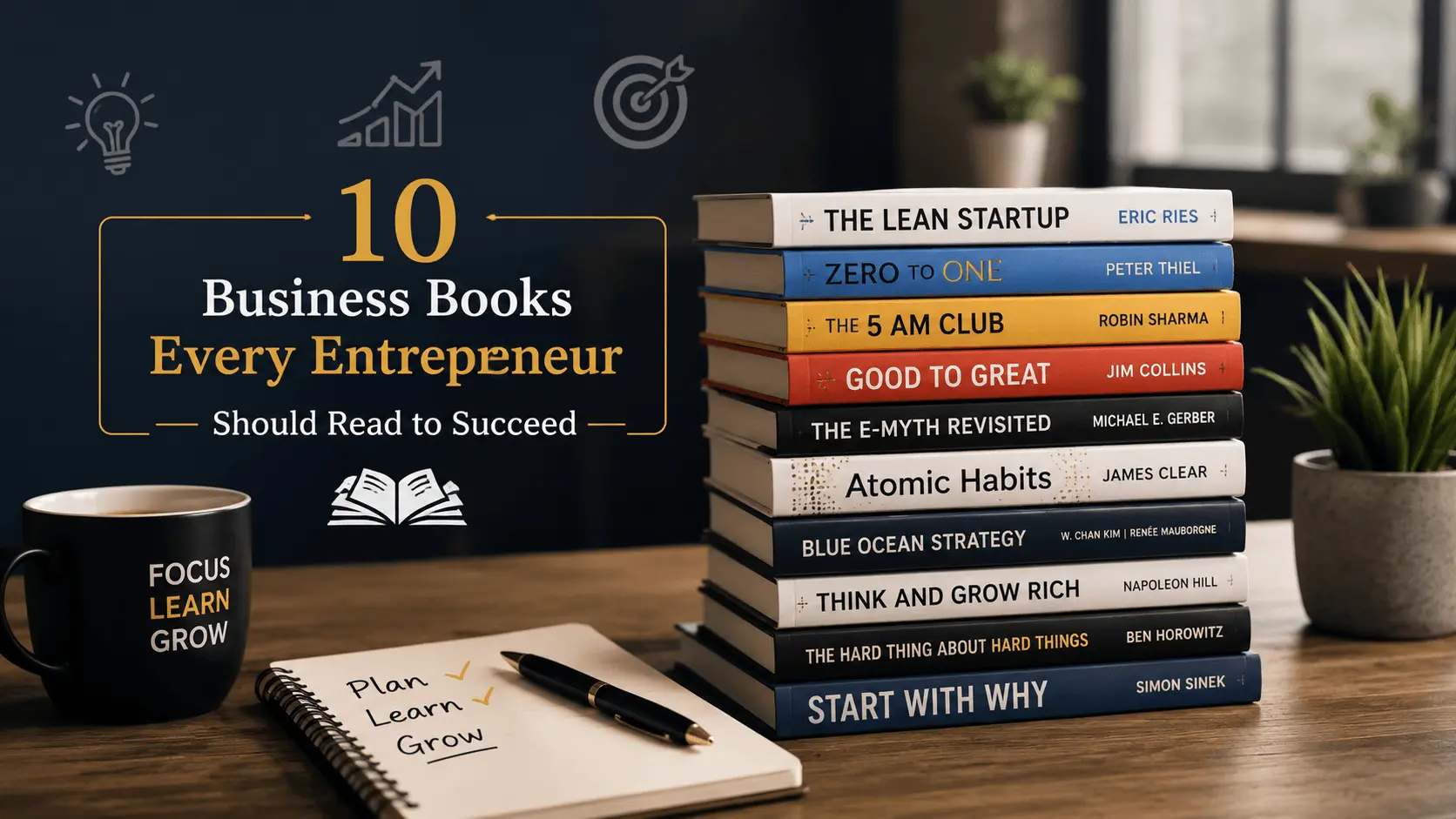
10 Business Books Every Entrepreneur Should Read
1. The Lean Startup by Eric Ries
If you are building a product without knowing whether customers actually want it, this book solves that problem directly. Eric Ries introduces the Build-Measure-Learn method, a cycle that helps you test ideas before spending months on development. Instead of guessing what customers want, you build a minimum viable product, or MVP, and let real feedback guide your next move.
This approach matters more than ever for cash-strapped founders. Startups that skip validation often build features nobody uses, wasting time and money they cannot get back. The Lean Startup shows you how to avoid that trap through small, fast, low-cost experiments.
Key Lessons
Test ideas before investing heavily in development
Build products customers actually want, not what you assume they want
Learn from failure quickly instead of repeating the same mistake
Let customer feedback guide every major product decision
Best For: Startup founders and first-time entrepreneurs launching their first product.
This is one of the most practical startup books available today, especially for founders working with a limited budget. It belongs on any list of books for startup founders because it turns guesswork into a repeatable process. If you only read one of these best startup books this year, this is a strong place to start.
2. Zero to One by Peter Thiel
Peter Thiel argues that true business success comes from creating something new, not copying what already exists. Zero to One challenges the common startup advice to imitate proven competitors. Instead, Thiel pushes founders to ask what valuable business nobody else is building yet.
The book covers innovation, building monopolies through unique value, and thinking independently instead of following the crowd. Thiel explains why competition often destroys profits, while genuine differentiation protects them. For any startup owner stuck copying a competitor's playbook, this book offers a sharp wake-up call.
Key Takeaway: Build something unique instead of copying competitors.
Zero to One is widely considered one of the essential business strategy books for founders building in crowded markets. It pairs well with market research, since standing out matters more as more entrepreneurs enter the same space online. With global ecommerce sales projected to approach $7 trillion in 2026, differentiation is no longer optional for new store owners.
Startup founders often use this book to reframe how they pitch investors and position their brand. Thiel's core question, what important truth do very few people agree with you on, is a useful exercise for any founder. It forces you to identify your real competitive edge instead of assuming customers will simply show up.
3. Atomic Habits by James Clear
James Clear makes the case that small, consistent habits build bigger results than occasional bursts of motivation. Atomic Habits breaks down exactly how habits form and how to redesign them for better outcomes. For a busy entrepreneur, this book turns productivity into a system instead of a struggle.
The book explains why systems matter more than goals alone. Setting a goal to grow revenue by 20 percent means little without a daily system that actually drives that growth. Clear shows founders how to build habits that compound over months and years.
Why It Matters for Entrepreneurs
Small daily improvements compound into major business growth over time
Systems reduce reliance on willpower during stressful, high-pressure weeks
Habit tracking helps founders stay consistent with marketing, sales, and outreach
This is one of the most practical productivity books for business owners juggling many roles at once. It also works as a business mindset book, since habits shape how founders respond to setbacks. Many startup owners revisit this book every year as their responsibilities and routines evolve.
4. The $100 Startup by Chris Guillebeau
Chris Guillebeau studied hundreds of people who built profitable businesses with minimal starting capital. The $100 Startup shows how ordinary skills can become real income when matched with a clear customer problem. This book removes the myth that you need a large budget to start a business.
Guillebeau focuses on solving specific customer problems instead of chasing trendy ideas. He walks through real case studies of founders who launched side businesses that grew into full-time income. The lessons apply directly to today's low-cost ecommerce and service-based startups.
The book is especially useful for aspiring entrepreneurs testing an idea before quitting a day job. It shows practical, low-risk paths into entrepreneurship rather than high-risk, high-capital bets. For anyone starting small, this remains one of the most encouraging and realistic startup books on the market.
Readers walk away with a simple framework: find a skill you have, find people who need it, and package it clearly. This straightforward approach makes it a favorite among founders building online stores or freelance businesses. It proves that a lean beginning does not limit long-term potential.
5. Good to Great by Jim Collins
Jim Collins and his research team studied companies that transformed from average performers into industry leaders. Good to Great identifies the specific leadership habits and cultural traits behind that jump. The findings are backed by years of data, not just opinion or trend-chasing advice.
The book introduces Level 5 Leadership, a style built on humility combined with intense professional will. Collins argues that sustainable growth depends more on disciplined people and disciplined thought than on charisma. This makes it one of the most respected leadership books for entrepreneurs building a lasting company.
Key Areas Covered
Leadership styles that drive long-term company performance
Building a strong, values-driven company culture
Getting the right people into the right roles early
For founders focused on business growth books that go beyond quick tactics, this title delivers lasting principles. It works well alongside The E-Myth Revisited, since both address how leadership shapes scalability. Startup owners planning to grow past a solo operation will find this especially useful.
6. The E-Myth Revisited by Michael E. Gerber
Michael E. Gerber explains why most small businesses stay stuck, and it usually has nothing to do with the product. The E-Myth Revisited introduces the idea of working on your business instead of just in it. This shift in mindset is often the difference between a business that scales and one that stays dependent on the founder.
Gerber breaks down how to build repeatable systems for every part of the business. He shows why documented processes make delegation possible, freeing founders from doing every task themselves. Without systems, growth simply means more hours worked, not more value created.
Core Lessons
Separate the roles of entrepreneur, manager, and technician inside your business
Build systems that do not depend entirely on the founder
Delegate tasks confidently once clear processes exist
Design your business to scale beyond your personal time
This is one of the most useful small business books for owners feeling stretched too thin. It belongs on every list of books for business owners planning to hire their first team members. The lessons apply directly whether you run a service business, an online store, or a local shop.
7. Influence: The Psychology of Persuasion by Robert Cialdini
Robert Cialdini spent years studying why people say yes to certain requests and offers. Influence breaks down six principles of persuasion, including reciprocity, social proof, and scarcity. These principles explain why some marketing campaigns convert far better than others.
For entrepreneurs, this book is a practical guide to ethical sales and marketing psychology. Understanding what actually builds trust helps founders write better product pages, emails, and ads. It also helps prevent wasted ad spend on messaging that does not connect with real buyer psychology.
Cialdini's research remains highly relevant as more shopping moves online and attention becomes harder to earn. Global ecommerce sales are projected to approach $7 trillion in 2026, meaning more brands are competing for the same customer attention. Understanding persuasion principles helps a small store stand out against much larger competitors.
This is one of the most cited marketing books for entrepreneurs for good reason. The principles apply to email campaigns, landing pages, checkout flows, and even customer service scripts. Founders who understand persuasion tend to build more trust with customers, which supports long-term loyalty and repeat sales.
8. Rich Dad Poor Dad by Robert Kiyosaki
Robert Kiyosaki contrasts two different approaches to money through the lens of his own upbringing. Rich Dad Poor Dad explains the difference between assets and liabilities in plain, simple language. This distinction shapes how entrepreneurs should think about spending, saving, and investing business profits.
The book challenges the idea that a steady paycheck alone builds real wealth. Kiyosaki encourages readers to build income-generating assets instead of only trading time for money. For founders, this often means reinvesting profits into systems, tools, or opportunities that keep generating value.
Financial Lessons for Founders
Understand the real difference between assets and liabilities
Build multiple income streams instead of relying on one source
Develop an investment mindset early in your business journey
Make spending decisions based on long-term financial impact
This remains one of the most widely read finance books for entrepreneurs, especially for new business owners. It works best when paired with practical bookkeeping habits and a real budget. The mindset shift alone makes it worth reading before your first major financial decision.
9. Blue Ocean Strategy by W. Chan Kim & Renée Mauborgne
Kim and Mauborgne argue that the most successful companies stop competing in crowded markets altogether. Blue Ocean Strategy encourages founders to create new, uncontested market space instead of fighting for existing customers. This approach reduces price competition and builds room for stronger profit margins.
The book walks through real examples of companies that redefined their industries by changing the rules. It focuses on innovation, differentiation, and creating new value for customers that competitors overlook. For startup owners in saturated niches, this book offers a clear path toward standing apart.
This is one of the most useful business strategy books for founders feeling stuck in price wars. It pairs naturally with Zero to One, since both push entrepreneurs toward genuine differentiation. Applying even one idea from this book can reshape how you position your product or service.
Founders in ecommerce especially benefit from this framework as online marketplaces grow more crowded every year. With more than 28 million ecommerce stores operating globally, standing out through differentiation matters more than ever. Blue Ocean Strategy gives founders a structured way to find that open space.
10. Think and Grow Rich by Napoleon Hill
Napoleon Hill studied hundreds of successful individuals to identify shared principles behind their achievements. Think and Grow Rich remains one of the most influential books ever written on mindset and persistence. Despite being decades old, its core lessons still apply directly to modern entrepreneurship.
The book covers goal setting, persistence through setbacks, and the mental discipline required for long-term success. Hill argues that clear, specific goals combined with consistent action separate successful people from everyone else. For founders facing daily obstacles, this book offers grounded encouragement backed by real examples.
Why It Still Matters Today
Clear goal setting keeps founders focused during uncertain periods
Persistence principles help entrepreneurs push through inevitable setbacks
Mindset lessons apply across industries and business models
This title remains a staple among business mindset books and self-improvement books for entrepreneurs alike. It works well as a yearly re-read, especially during difficult stretches of building a company. Many founders credit this book with helping them stay committed when early results felt slow.
Comparison Table: Which Book Is Right for You?
Not every founder needs to start with the same book. Use this quick comparison table to match each title to your current business stage and biggest challenge right now.
Book | Best For | Key Focus | Recommended For |
The Lean Startup | Startup founders | Validation | Beginners |
Zero to One | Innovation | Strategy | Tech startups |
Atomic Habits | Productivity | Habits | Everyone |
The $100 Startup | Low-cost business | Entrepreneurship | Side hustlers |
Good to Great | Leadership | Growth | Business owners |
The E-Myth Revisited | Systems | Scaling | Small businesses |
Influence | Marketing | Sales | Entrepreneurs |
Rich Dad Poor Dad | Finance | Money mindset | New entrepreneurs |
Blue Ocean Strategy | Innovation | Market creation | Growth businesses |
Think and Grow Rich | Mindset | Success principles | Everyone |
If you are validating a new idea, start with The Lean Startup or The $100 Startup. If you are struggling with delegation, The E-Myth Revisited addresses that pain point directly. Founders focused on marketing and sales should prioritize Influence, while those planning long-term growth benefit most from Good to Great and Blue Ocean Strategy.
Key Lessons Every Entrepreneur Can Apply Today
You do not need to finish every book on this list before taking action. Even one applied lesson can shift how your business runs starting this week. Here are the most practical takeaways worth applying right now.
Validate ideas before investing heavily in development or inventory
Build strong daily habits instead of relying on motivation alone
Focus relentlessly on solving real customer needs and pain points
Think long-term instead of chasing short-term wins
Create documented systems so your business does not depend only on you
Learn basic financial management before making major spending decisions
Develop leadership skills early, even with a small team
Keep learning throughout your entrepreneurial journey, not just at the start
These business growth books all point toward the same conclusion. Consistent, small actions taken from proven frameworks outperform big, unplanned bets. Treat this list as a working toolkit, not a one-time reading assignment.
Best Business Name Generator
Choosing the right business name is one of the first and most important decisions for any entrepreneur. A memorable name strengthens your brand identity, improves customer recall, and creates a professional first impression. Whether you are launching your first startup or rebranding an existing company, a unique and meaningful name lays the foundation for long-term success.
Ai Bizname is a free AI-powered business name generator built to help entrepreneurs, startups, and small business owners. It generates hundreds of creative, industry-specific business name ideas within seconds. Simply enter your niche, choose a preferred naming style, and add a few business details to receive tailored suggestions matching your brand vision.
Instead of spending hours brainstorming names, Ai Bizname streamlines the entire naming process with AI-driven suggestions. It works well for validating new business concepts and discovering fresh branding ideas before launch.
How to Get the Most Value from Business Books
Reading alone will not grow your business. The real value comes from applying what you learn in small, consistent ways.
Take notes while reading so key ideas are easy to revisit later
Highlight insights that connect directly to a current business challenge
Apply one lesson each week instead of trying to change everything at once
Join entrepreneur book clubs to discuss ideas and stay accountable
Discuss key lessons with mentors who can offer real-world context
Revisit favorite books annually, since new challenges reveal new insights
Combine reading with practical implementation, not just note-taking
This habit turns reading into a business tool instead of a passive hobby. Small business owners who apply this system tend to retain lessons longer and see faster results. Treat every book as a working manual, not a one-time story.
Conclusion
Reading business books is one of the highest-return investments any entrepreneur can make. The right books provide practical strategies for leadership, marketing, finance, productivity, innovation, and business growth. This entrepreneur reading list was built to solve real pain points, not just offer inspiration.
The real value comes from applying these lessons, not simply finishing each book. Focus on one idea at a time and track how it changes your results. Building a lifelong learning habit helps you stay competitive as markets, tools, and customer behavior keep evolving.
Choose one book from this list and start reading this week. Pick a single actionable lesson and apply it to your business before moving to the next chapter. Small, consistent action from proven frameworks is how lasting business success gets built.
Frequently Asked Questions
Which business book should every entrepreneur read first?
The Lean Startup is a strong first choice for most founders. It teaches validation before investment, which prevents wasted time and money early on.
What are the best startup books for beginners?
The Lean Startup and The $100 Startup work well for beginners. Both focus on low-risk testing and starting with limited resources.
How many business books should entrepreneurs read each year?
There is no fixed number, but one book per month is a realistic goal. Quality of applied lessons matters far more than total books read.
Are business books still relevant in the AI era?
Yes, core principles like leadership, strategy, and customer focus still apply. AI changes tools and speed, but not the fundamentals these books teach.
Which books improve leadership skills?
Good to Great and The E-Myth Revisited both focus heavily on leadership. They teach how to build teams and systems that do not depend only on you.
Which books teach marketing and sales?
Influence: The Psychology of Persuasion is the strongest choice for marketing and sales. It explains the psychology behind why customers say yes.
What books help improve financial knowledge?
Rich Dad Poor Dad is the most accessible starting point for financial mindset. It explains assets, liabilities, and investment thinking in simple terms.
Which business books focus on mindset?
Think and Grow Rich and Atomic Habits both focus heavily on mindset. Together, they cover persistence, goal setting, and daily habit formation.
Can reading business books improve startup success?
Yes, applied lessons from proven founders help avoid common, costly mistakes. Reading will not guarantee success alone, but it improves your odds significantly.
Where can entrepreneurs find more business learning resources?
Beyond books, entrepreneurs can explore podcasts, founder communities, and mentorship programs. Combining multiple learning sources builds a more complete, well-rounded business education.